
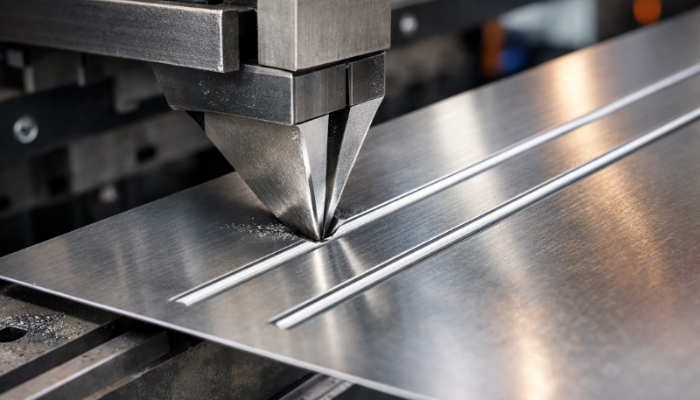

Grooving metal is one of the most important machining processes in modern manufacturing. From automotive components and aerospace parts to plumbing fittings and industrial machinery, grooving plays a critical role in producing accurate, durable, and functional metal products. By removing material in a controlled manner, manufacturers create grooves that improve assembly, sealing, strength, and overall product performance.
Whether you’re a machinist, engineer, manufacturing student, or business owner, understanding grooving metal can help you appreciate how precision engineering contributes to high-quality production. This comprehensive guide explores the fundamentals of metal grooving, common techniques, essential tools, industrial applications, advantages, challenges, and future trends. By the end, you’ll have a complete understanding of why grooving remains one of the most valuable operations in modern machining.
What Is Grooving Metal?
Grooving metal is a machining process that involves cutting narrow channels or recesses into the surface of a metal workpiece. These grooves are designed for various purposes, including accommodating seals, retaining rings, O-rings, bearings, snap rings, and threaded components. The process is performed using specialized cutting tools on machines such as CNC lathes, milling machines, and turning centers.
Unlike general cutting operations, grooving requires exceptional precision because groove width, depth, and location directly affect the functionality of the finished component. Even slight deviations can impact assembly, sealing performance, or mechanical reliability. As a result, modern manufacturers rely heavily on precision tooling and computer-controlled machining systems to achieve consistent results.
Grooves can be created on both external and internal surfaces. External grooves are commonly found on shafts and cylindrical parts, while internal grooves are machined inside bores, pipes, and fittings. Depending on the application, grooves may have square, rounded, V-shaped, or specially designed profiles.
The importance of grooving extends across nearly every manufacturing industry. Components used in engines, hydraulic systems, aerospace assemblies, medical devices, and heavy machinery often depend on accurately machined grooves to ensure proper performance and long-term durability.
Common Grooving Metal Techniques and Machining Methods
Several machining techniques are used in grooving metal, each selected according to the material, component geometry, and production requirements. One of the most common methods is lathe grooving, where a grooving tool moves radially into a rotating workpiece to produce an accurately sized groove. CNC lathes have made this process highly efficient by delivering repeatable precision for high-volume manufacturing.
Face grooving is another widely used technique. Instead of cutting along the outside diameter, the groove is machined on the face of the workpiece. This method is commonly used for sealing surfaces and mechanical assemblies that require precise groove placement. Internal grooving, meanwhile, involves cutting grooves inside holes or cylindrical bores using specially designed internal grooving tools.
Milling is another effective approach for producing grooves, especially when working with flat surfaces. End mills, slot cutters, and T-slot cutters create grooves of varying dimensions depending on design specifications. CNC milling machines offer exceptional flexibility for producing complex groove patterns in a single setup.
Advanced manufacturing environments increasingly rely on multi-axis CNC machining. These systems combine turning, milling, drilling, and grooving into one automated process, reducing production time while improving dimensional accuracy. Automation also minimizes human error and ensures consistent quality throughout large production runs.
Manufacturers may also use specialized processes such as broaching, grinding, or electrical discharge machining (EDM) when traditional cutting methods are unsuitable. These advanced techniques are particularly useful for hardened materials or intricate groove geometries requiring exceptional precision.
Essential Tools and Materials Used for Grooving Metal
Successful grooving metal operations depend heavily on selecting the appropriate cutting tools and machine setups. Grooving inserts are among the most widely used cutting tools because they provide excellent precision, durability, and easy replacement. These inserts are available in multiple widths and profiles to accommodate different groove dimensions and applications.
Tool holders play an equally important role by providing rigidity and minimizing vibration during machining. Stable tooling helps achieve smoother finishes while extending tool life. Many modern tool holders incorporate coolant channels that improve chip evacuation and reduce heat generation during cutting operations.
The choice of cutting material significantly affects machining performance. Carbide inserts dominate industrial applications due to their hardness, wear resistance, and ability to maintain sharp cutting edges at high temperatures. Coated carbide inserts offer even greater durability by reducing friction and extending tool life. High-speed steel tools remain useful for lower-speed applications and softer metals, while ceramic and cubic boron nitride (CBN) tools are preferred for machining hardened materials.
Different metals require different machining strategies. Aluminum is relatively easy to groove due to its softness and excellent machinability. Stainless steel demands careful control of cutting speeds because of its toughness and tendency to generate heat. Titanium requires rigid setups and specialized tooling due to its strength and poor thermal conductivity. Hardened steels often require advanced cutting materials and optimized machining parameters to maintain productivity.
Coolants and lubricants are also essential components of the grooving process. Proper cooling reduces cutting temperatures, improves surface finish, minimizes tool wear, and enhances chip removal. Efficient chip evacuation prevents recutting and helps maintain consistent groove quality throughout the machining operation.
Industrial Applications and Benefits of Grooving Metal
The applications of grooving metal extend across numerous industries because grooves perform vital mechanical functions in engineered components. In the automotive sector, grooves are used in engine pistons, crankshafts, transmission components, brake systems, and hydraulic assemblies. Precision grooves ensure reliable sealing, smooth operation, and extended component lifespan.
The aerospace industry relies heavily on grooved components for aircraft engines, landing gear, hydraulic systems, and structural assemblies. Since aerospace components must meet strict safety and performance standards, grooving operations require exceptional accuracy and rigorous quality control procedures.
Manufacturers of industrial machinery also benefit from precision grooving. Bearings, gears, pumps, valves, cylinders, and rotating shafts frequently incorporate grooves that accommodate retaining rings, lubrication channels, or sealing elements. Proper groove design contributes to improved equipment reliability and reduced maintenance costs.
Medical device manufacturing represents another critical application. Surgical instruments, orthopedic implants, dental components, and diagnostic equipment often include precision grooves that support assembly or enhance functionality. Since medical products demand extremely tight tolerances, advanced CNC machining technologies are commonly employed.
The advantages of grooving include improved component assembly, enhanced sealing performance, better lubrication, increased structural reliability, and greater manufacturing efficiency. Properly machined grooves reduce wear, prevent leakage, simplify maintenance, and contribute to the overall longevity of mechanical systems.
Additionally, grooving enables engineers to create compact, lightweight designs without sacrificing strength or functionality. This capability is particularly valuable in industries focused on improving energy efficiency and reducing material consumption.
Best Practices, Challenges, and Future Trends in Grooving Metal
Although grooving metal offers numerous advantages, achieving consistent results requires careful planning and execution. One of the most common challenges is controlling vibration during machining. Excessive vibration can produce poor surface finishes, dimensional inaccuracies, and premature tool wear. Rigid machine setups and appropriate cutting parameters help minimize these issues.
Chip control represents another important consideration. Grooving operations generate narrow chips that can accumulate inside the groove or wrap around the cutting tool. Modern insert designs incorporate specialized chip breakers that direct chips away from the cutting zone, improving machining efficiency and protecting both the tool and workpiece.
Tool wear must also be monitored closely. Continuous cutting generates heat and mechanical stress that gradually reduce tool performance. Regular inspection and timely replacement of cutting inserts ensure consistent groove dimensions while preventing unexpected production interruptions.
Looking toward the future, automation and smart manufacturing continue transforming grooving operations. Advanced CNC systems now integrate real-time monitoring, predictive maintenance, and adaptive machining technologies that automatically adjust cutting conditions based on sensor feedback. These innovations improve productivity while maintaining exceptional quality standards.
Artificial intelligence is beginning to influence machining optimization by analyzing production data and recommending optimal cutting parameters. Combined with industrial robotics and digital manufacturing systems, AI helps reduce downtime, increase efficiency, and improve overall machining consistency.
Sustainability is also becoming an important consideration. Manufacturers increasingly adopt energy-efficient machines, environmentally friendly coolants, and optimized machining strategies that reduce waste while maximizing material utilization. These developments ensure that grooving remains both economically and environmentally responsible in modern manufacturing.
Conclusion
Grooving metal remains one of the most essential machining processes in precision manufacturing. By creating accurately sized grooves for sealing, retention, lubrication, and assembly, manufacturers produce reliable components that power industries ranging from automotive and aerospace to medical technology and industrial machinery.
As machining technology continues advancing through CNC automation, artificial intelligence, and smart manufacturing systems, the future of grooving metal promises even greater accuracy, efficiency, and sustainability. Whether producing high-volume industrial components or specialized precision parts, mastering grooving techniques allows manufacturers to achieve superior product quality while meeting the increasingly demanding requirements of modern engineering.
Frequently Asked Questions (FAQs)
1. What is grooving metal?
Grooving metal is a machining process that cuts precise grooves or channels into metal components for functional or assembly purposes.
2. What machines are used for grooving metal?
CNC lathes, turning centers, milling machines, machining centers, and specialized grooving equipment are commonly used.
3. Why is grooving important?
Grooving improves sealing, component retention, lubrication, assembly, and overall mechanical performance.
4. Which materials can be grooved?
Aluminum, stainless steel, carbon steel, titanium, brass, copper, cast iron, and many other metals can be grooved.
5. What tools are commonly used in grooving?
Carbide inserts, grooving holders, boring bars, slot cutters, end mills, and face grooving tools are widely used.
6. What is internal grooving?
Internal grooving creates grooves inside holes or cylindrical bores for seals, retaining rings, or mechanical components.
7. How does CNC technology improve grooving?
CNC machines provide exceptional precision, repeatability, automation, and faster production with minimal human error.
8. What challenges occur during grooving?
Common challenges include vibration, chip control, tool wear, heat generation, and maintaining dimensional accuracy.
9. Which industries use grooving metal the most?
Automotive, aerospace, construction, energy, manufacturing, medical device production, and heavy machinery industries rely heavily on grooving.
10. What is the future of grooving metal?
The future includes AI-assisted machining, smart manufacturing, predictive maintenance, robotic automation, and more sustainable production practices.