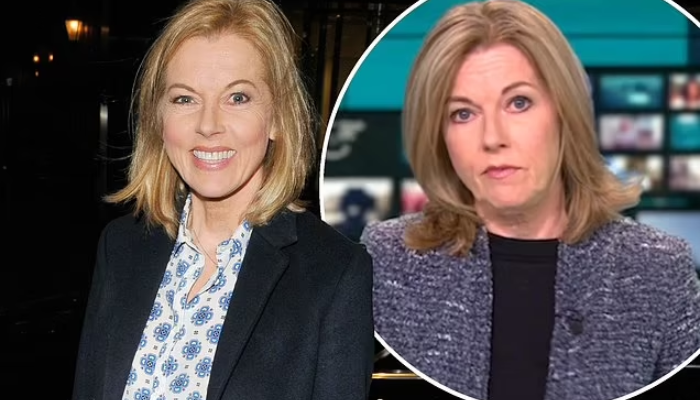

The search term “mary nightingale illness” has attracted considerable attention from viewers who want to know whether the long-serving ITV News presenter has experienced a serious health problem. Mary Nightingale is a familiar presence in British broadcasting, and because audiences see her regularly on television, even a temporary absence, a different vocal tone, or an unusual appearance can quickly trigger online questions about her wellbeing.
However, when the subject is a real person’s health, curiosity needs to be separated from evidence. Online articles can repeat the same allegation until it appears established, even when the original claim has never been independently confirmed. In Mary Nightingale’s case, there are numerous online claims about cancer, chronic illness and voice problems, but the available authoritative public record does not establish that she currently has a serious illness. ITV’s own presenter profile continues to identify her as the presenter of the ITV Evening News.
That distinction is central to understanding mary nightingale illness searches. A responsible health article should not diagnose someone from television appearances, photographs, changes in voice or periods away from the screen. Instead, it should identify what Mary Nightingale or ITV has actually disclosed, distinguish confirmed events from speculation, and explain why unsupported health claims should be treated cautiously.
The information below therefore takes a verification-first approach. It examines Mary Nightingale’s public professional status, the origins of health speculation, the documented deepfake incident involving her likeness, and what can—and cannot—reasonably be concluded about her health from reliable public information.
Mary Nightingale Illness: What Reliable Sources Actually Confirm
When researching mary nightingale illness, the most important starting point is the distinction between a confirmed medical disclosure and an internet allegation. As of the latest publicly available information reviewed for this article, ITV’s official profile continues to list Mary Nightingale as a presenter of the ITV Evening News. Her profile also highlights her long broadcasting career and her two TRIC Newscaster of the Year awards.
That professional information is significant because it provides a current, first-party reference point. It does not prove that a person has never been ill—nor would continued employment rule out ordinary health problems—but it does demonstrate that there is no publicly announced retirement or medical withdrawal from ITV in the source reviewed. Recent ITV material also continues to feature Nightingale in journalism and interviewing roles, reinforcing the fact that she remains publicly active as a broadcaster.
There is an important limitation, however. The absence of a public diagnosis is not evidence that a person has never experienced a private medical issue. Medical information belongs to the individual, and public figures are not required to disclose diagnoses, treatments or consultations simply because audiences are curious. Consequently, it would be inaccurate to claim that Mary Nightingale has a completely illness-free medical history when no comprehensive private medical record is publicly available.
For readers searching Mary Nightingale health update, the most accurate conclusion is therefore narrower: there is no reliable public confirmation in the authoritative sources reviewed here of a current serious illness affecting her role as an ITV News presenter. That is very different from claiming that every health rumour about her has been investigated or that she has never experienced a routine illness.
Why Searches for Mary Nightingale Illness Have Generated Rumours
Search interest surrounding mary nightingale illness illustrates a broader problem with celebrity and public-figure health information. Television makes presenters unusually visible. Viewers become accustomed to a person’s normal voice, facial expressions and presentation style, so a small difference can become noticeable. If a presenter sounds tired, pauses differently or does not appear on a particular broadcast, some viewers may immediately wonder whether there is a medical explanation.
But an observation is not a diagnosis. A person’s voice can vary for countless reasons, including ordinary tiredness, emotion, environmental conditions, temporary irritation or the natural variation that occurs during years of broadcasting. Without a statement from the individual, an employer, or a credible medical source with appropriate permission, assigning a specific disease to an on-screen observation is speculation.
Another factor is the way search-driven websites operate. One unverified article can make a dramatic claim; another website may repeat it without checking the original evidence; later articles can then cite those repetitions as though they represent multiple independent reports. The result creates an illusion of consensus. In reality, ten websites repeating the same unsupported statement do not make that statement medically verified.
This is particularly important for claims involving serious diseases such as cancer. A headline containing phrases such as “diagnosis,” “battle,” “health crisis,” or “secret illness” can attract attention even when the article itself offers no primary evidence. Readers researching mary nightingale illness should therefore look for an original interview, an official ITV statement, a direct statement from Nightingale, or reporting from an established news organisation that clearly identifies its evidence.
A useful rule is simple: the more serious the medical claim, the stronger the evidence should be.
The Mary Nightingale Deepfake Incident and Why It Matters
One documented event has complicated the online information environment surrounding Mary Nightingale: in 2024, her likeness and apparent voice were used in an AI-generated deepfake video. ITV reported that the manipulated video appeared on social media and falsely portrayed Nightingale as promoting an investment-related app. The video was subsequently removed.
Nightingale herself spoke publicly about the incident through ITV. She explained that she was angry that her image and supposed voice had been manipulated and described the misuse as identity theft. She also expressed concern that deceptive material could damage the trust audiences place in journalists.
The deepfake incident is not evidence of an illness. It is important to make that distinction because AI-generated material can blur the boundary between authentic footage and fabricated content. A manipulated video may look sufficiently realistic to persuade viewers that a presenter actually said or did something that never happened. In a health-information context, that creates an especially serious risk.
The incident also demonstrates why viewers should be cautious when encountering a video or social-media post apparently showing a famous journalist discussing a medical condition, treatment or product. Visual familiarity is no longer enough to establish authenticity. ITV separately reported that deepfakes have been used to imitate television doctors and promote dubious health-related products, illustrating how impersonation technology can intersect directly with medical misinformation and scams.
For anyone researching mary nightingale illness, the practical lesson is clear: a social-media video featuring Mary Nightingale should not automatically be treated as a genuine statement from her. Check whether the material has been published through ITV or another established source, whether the journalist’s own verified channels acknowledge it, and whether independent reporting confirms the claim.
Mary Nightingale’s Career Provides Important Context
Mary Nightingale has spent decades working in television journalism, making her one of the most recognisable news presenters associated with ITV. ITV’s official profile identifies her as the presenter of the ITV Evening News and notes that she has twice received the TRIC Newscaster of the Year award. Her long association with the programme is part of the reason viewers notice changes in her schedule or presentation.
Her career has also involved reporting and interviewing on emotionally difficult subjects. ITV’s archive includes numerous examples of Nightingale presenting or conducting interviews involving crime, bereavement, healthcare and other sensitive subjects. For example, ITV published a 2013 report presented by Nightingale examining compassion and pressures within nursing, while later reporting has featured her interviewing people affected by serious and traumatic events.
That background matters because broadcasting is a highly visible profession. Viewers may interpret changes in tone or delivery more readily when they know a presenter has been on television for many years. Yet professional visibility should not be confused with access to private health information. A journalist’s public career can be documented in considerable detail while their medical history remains private.
It is also worth separating career continuity from medical certainty. The fact that Mary Nightingale continues to be associated with ITV does not establish that she has never had a minor illness or health concern. Equally, a temporary absence from television would not automatically demonstrate that she was seriously unwell. Television schedules change for holidays, assignments, programme arrangements and many other ordinary reasons.
For SEO readers searching Mary Nightingale illness 2026, the most responsible interpretation of the available evidence is therefore one of continuity rather than a confirmed health crisis. ITV’s current public profile remains an important primary reference, while unsupported websites should not be treated as substitutes for an official health announcement.
How to Evaluate Claims About Mary Nightingale’s Health
Anyone researching mary nightingale illness can use a straightforward fact-checking process. First, identify the original source. If an article claims that Mary Nightingale has received a diagnosis, ask whether it links to an ITV statement, a direct interview, a reputable newspaper report, or another verifiable primary source. If the article only cites “fans,” “reports,” unnamed sources or another website, the claim deserves considerable caution.
Second, check the date. Health stories can remain online long after the circumstances that supposedly prompted them have changed. An old article can continue appearing in search results even though it no longer reflects the person’s professional circumstances. A current ITV profile is therefore more useful for establishing her present public role than an undated or recycled blog post.
Third, avoid interpreting symptoms from television footage. Viewers cannot diagnose a presenter by listening to a voice, looking at someone’s face or comparing photographs taken years apart. Even trained doctors generally require a clinical history, examination and appropriate investigations before making a diagnosis. A viewer watching a news broadcast has none of that information.
Fourth, be particularly careful with dramatic claims involving cancer or other life-threatening diseases. Such allegations can cause unnecessary distress to the person involved and their family while misleading readers. If a serious diagnosis has genuinely been made public, credible reporting should normally provide a clear source rather than relying entirely on speculation.
Finally, distinguish “not publicly confirmed” from “definitely false.” The first statement describes the evidence available to the public. The second makes a stronger claim that may require evidence of its own. For Mary Nightingale, the safest evidence-based wording is that no serious current illness has been confirmed in the authoritative public sources reviewed for this article.
That approach is not evasive. It is good health journalism. In an online environment where misinformation can travel quickly, acknowledging the limits of the evidence is more trustworthy than filling gaps with speculation.
Conclusion
The search for mary nightingale illness reflects understandable curiosity about one of ITV’s most recognisable news presenters, but the available evidence does not justify turning online speculation into a medical diagnosis. ITV continues to identify Mary Nightingale as the presenter of the ITV Evening News, and recent ITV material confirms her continuing involvement in journalism.
There is no reliable public evidence in the authoritative sources reviewed here confirming that Mary Nightingale currently has a serious illness. Claims about cancer, chronic disease or other specific diagnoses should therefore not be presented as established facts without appropriate primary evidence.
The documented 2024 deepfake incident is also important context, but it was an episode involving artificial manipulation of Nightingale’s image and voice—not a health condition. ITV reported that the fabricated video was used to promote an investment-related app and that Nightingale herself condemned the misuse of her identity.
Ultimately, the most useful answer to “What is Mary Nightingale’s illness?” is that there is no publicly verified serious illness that can responsibly be identified from the evidence examined. Readers should be wary of sensational headlines, recycled claims and social-media material that lacks independent verification.
When it comes to someone’s health, accuracy matters more than intrigue. The responsible approach is to report what is confirmed, label what is unverified, and respect what remains private.
FAQs About Mary Nightingale Illness
1. Does Mary Nightingale have a confirmed illness?
There is no confirmed serious current illness identified in the authoritative public sources reviewed for this article. ITV’s current presenter profile continues to list Mary Nightingale as an ITV Evening News presenter.
2. Is Mary Nightingale still presenting ITV News?
Yes. ITV’s official team profile identifies Mary Nightingale as the presenter of the ITV Evening News. Recent ITV content also continues to feature her in journalism and interviews.
3. Does Mary Nightingale have cancer?
There is no authoritative public confirmation establishing that Mary Nightingale has cancer. Claims of a cancer diagnosis should not be treated as factual unless supported by a reliable primary or authoritative source.
4. Why are people searching for “mary nightingale illness”?
Searches can arise when viewers notice a presenter’s absence, a perceived change in voice or appearance, or online stories making health claims. None of these observations, by themselves, establishes that a person has a medical condition.
5. Has Mary Nightingale ever discussed a health problem publicly?
The available authoritative sources reviewed for this article do not provide a verified basis for assigning her a current serious diagnosis. It is therefore preferable not to repeat specific medical claims that lack reliable sourcing.
6. What happened to Mary Nightingale in the 2024 deepfake incident?
In 2024, an AI-manipulated video used Mary Nightingale’s likeness and apparent voice to promote an investment-related app. ITV reported that Nightingale was angry about the incident and described the misuse of her identity as theft.
7. Was the Mary Nightingale deepfake connected to an illness?
No. The documented incident involved artificial manipulation and fraudulent promotional content. It was not evidence of a medical condition.
8. Can a change in a newsreader’s voice indicate illness?
A voice change can have many possible causes, ranging from temporary and ordinary factors to medical conditions. However, it is impossible to determine the cause of an individual’s voice change simply by watching television. A diagnosis requires appropriate professional medical assessment.
9. Is Mary Nightingale still active professionally in 2026?
ITV’s current public profile continues to identify her as the presenter of the ITV Evening News. That provides strong evidence that she remains professionally associated with the programme.
10. What is the most reliable source for a Mary Nightingale health update?
For information about her professional status, ITV’s official presenter profile is an important primary source. For any future medical announcement, readers should look for a direct statement from Mary Nightingale, ITV, or reputable journalism that clearly identifies its evidence rather than relying on unsourced blogs or social-media posts.